
Nursing Text Books: Print
Exam Prep, Study Guides, Handbooks (Print & Digital)
Anatomy, Physiology, and Movement (Print & Digital)
Personal Narratives, Professionalism, Anecdotes & Wisdom, Ethical & Historical Perspectives
Writing and Citation Help
Medications, Dosages, & Medical Mathematics
Government Websites
Centers for Disease Control Nat’l Institutes of Health
Nat’l Library of Medicine
Nat’l Institute of Nursing Research
NYS Dept. of Health
Pubmed Central
U.S. Dept. Health & Human Services
The U.S. Department of Health and Human Services Office of Minority Health
NOAH -NYS Health Info
Suffolk County Dept. of Health Services
MyHealthFinder
Occupational Outlook Handbook
Career One Stop
O*Net OnLine
Culturally & Linguistically Appropriate Services (CLAS) in Nursing
Nursing Skills: OER (Open Educational Resources)
What is OER? Open Educational Resources are teaching and learning resources that reside in the public domain or have been shared under a license that allow others to freely use and revise them. Open educational resources can include entire courses, course materials, textbooks, multimedia, or teaching techniques.
- Practical Clinical Skills | Practice ECGs, Auscultation and Taking Blood Pressure
- MedlinePlus: Test Your Knowledge
- Introduction – Clinical Calculations – LibGuides at Georgia Highlands College
- Nursing Exam for NCLEX, Fundamentals, Medical-Surgical and more.
- MERLOT Nursing Materials
- Practice Tests Archive – ACLS.com
- BLS Pre Test with Answers and Explanations | Advanced Medical Certification
- SkillsCommons
- Lumen Learning
Remember the 5 W’s:
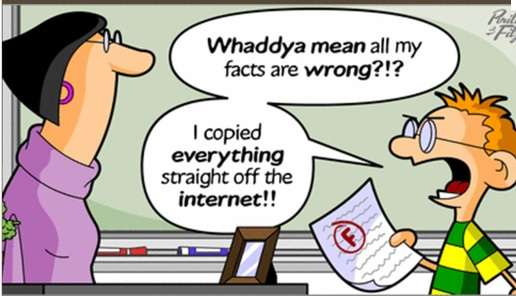
Who: Who is responsible for the creation of the site? Do they have listed credentials? Are they associated with a reputable institution? Who sponsors the creation and maintenance of the page? Can you contact them? (Look for About Us or Contact Us)
What: What is the purpose of this site? What is the URL of the site and what might that tell you about its purpose? What aspects of the site make it difficult/easy to use? (For example: typos, easy navigation, nice layout, images, too much advertising, etc.) What is the goal of this website? What is the viewpoint? (Give facts, sell, inform, persuade, laughter) Is it intended to help people do research or talk them into buying something?
Where: Where is this information coming from? Look for links to other resources. Is the information documented? Do the links reflect a bias? Look at the publisher (first part of URL usually): is it the true publisher or possibly a fake? Is there a bibliography or listed references? Is the site listed with an established institution? (About Us)
When: When was the site last updated? Does the site even have a date? Does the currency of the information directly impact your subject?
Why: Why is this website useful for your research? Is it necessary for your research or could you find the information through a better source?
What is Generative Artificial Intelligence?
Generative artificial intelligence (AI) generates new content based on a prompt or question. It does this with large language model technology that is trained on massive amounts of data. This data is used to recognize trends and patterns in language to generate new text. For example, a generative text model trained on Shakespeare’s works could create a new sonnet that follows the same style and tone as Shakespeare’s writing.
Can you use it? You are probably wondering if you are allowed to use generative artificial intelligence in your classes. The answer is that it is entirely up to your professor.
Therefore, you should:
• Check the syllabus for information about artificial intelligence
• If the syllabus does not mention it, ask your professor
• If your professor says that you may not use AI, DO NOT use it!
• If your professor allows the use of AI, be completely transparent about how and why you used it.
• If you paraphrase or quote text generated by AI in an assignment, you MUST cite it.
Using AI Ethically:
• Provide your professor with an “AI use disclosure statement” and include it with your assignment. For example: “I used ChatGPT to brainstorm research topic ideas and it provided me with this topic ” The Impact of Dog-Assisted Therapy on Children with Autism Spectrum Disorder”. It also generated an outline for this topic”.
• ChatGPT allows you to save a copy of your conversation transcript. Simply click on the upload icon in the top right corner of the conversation and copy the link. You can then include the link with your assignment.
• Provide citations every time you paraphrase or quote from a generative AI conversation.
If you are interested in learning more about how generative artificial intelligence works, this video does an excellent job of explaining it: The Technology behind ChatGPT from the University of Arizona Libraries: https://player.vimeo.com/video/857223288
Prompt Writing: Effective prompt writing will produce useful, relevant results from a chatbot.
The CLEAR Framework provides suggestions for drafting and revising chat prompts.
CONCISE: Eliminate extra words that can derail a chatbot’s output. Focus on brevity and clarity.
• (OK) Please create a detailed explanation of the effects of warming global temperatures on glacier flow mechanics.
• (Better) How does global warming affect glacier flow?
LOGICAL: The order of ideas or steps in your prompt can work for you or against you, potentially producing a lot of irrelevant information.
• (OK) How do you paint a house?
• (Better) Outline the step by step process for painting the exterior of a house, starting with paint selection and ending with inspection.
EXPLICIT: Spell out precisely what kind of output you’d like to generate so you get what you need the first time.
• (OK) Create an image that illustrates lab safety.
• (Better) Create a black and white, abstract image on a transparent background that illustrates lab safety.
ADAPTIVE: Be prepared to adjust your prompt based on what you learned from the output.
• (OK) What are the consequences of social media addiction?
• (Better) How does social media addiction affect adolescent anxiety?
REFLECTIVE: Examine the output generated in response to your prompts and think critically about accuracy, relevance, and completeness. Learn from these outputs what works best and apply your analysis to your future prompts.
Lo, Leo. S “The CLEAR Path: A Framework for Enhancing Information Literacy Through Prompt Engineering.” Journal of Academic Librarianship, vol. 49, no. 4, 2023, 102720, https://doi.org/10.1016/j.acalib.2023.102720
LIMITATIONS:
Hallucinations: If a chatbot doesn’t have the necessary data to answer a question it may simply make up answers to prompts, which is called a hallucination. For example, if you prompt a chatbot for books and articles on a particular topic, it may provide citations that sound plausible but aren’t real. The only way to know whether a source generated by AI is accurate is to search for it yourself. Therefore, you would be better off using the Library databases to search for sources.
Attribution: Chatbots create responses based on enormous amounts of synthesized data, which makes it impossible to know the origin of the information.
Replication: Because chatbots produce a different response each time they are prompted, there is no way to reliably recreate the same results. This is particularly problematic when it comes to scientific research.
Currency: Access to up-to-date information varies from chatbot to chatbot, which makes it difficult to know whether information is current.
Bias: Chatbots can provide biased information because of training data that focuses on specific demograp
Questions?
Contact -- Erin Clark